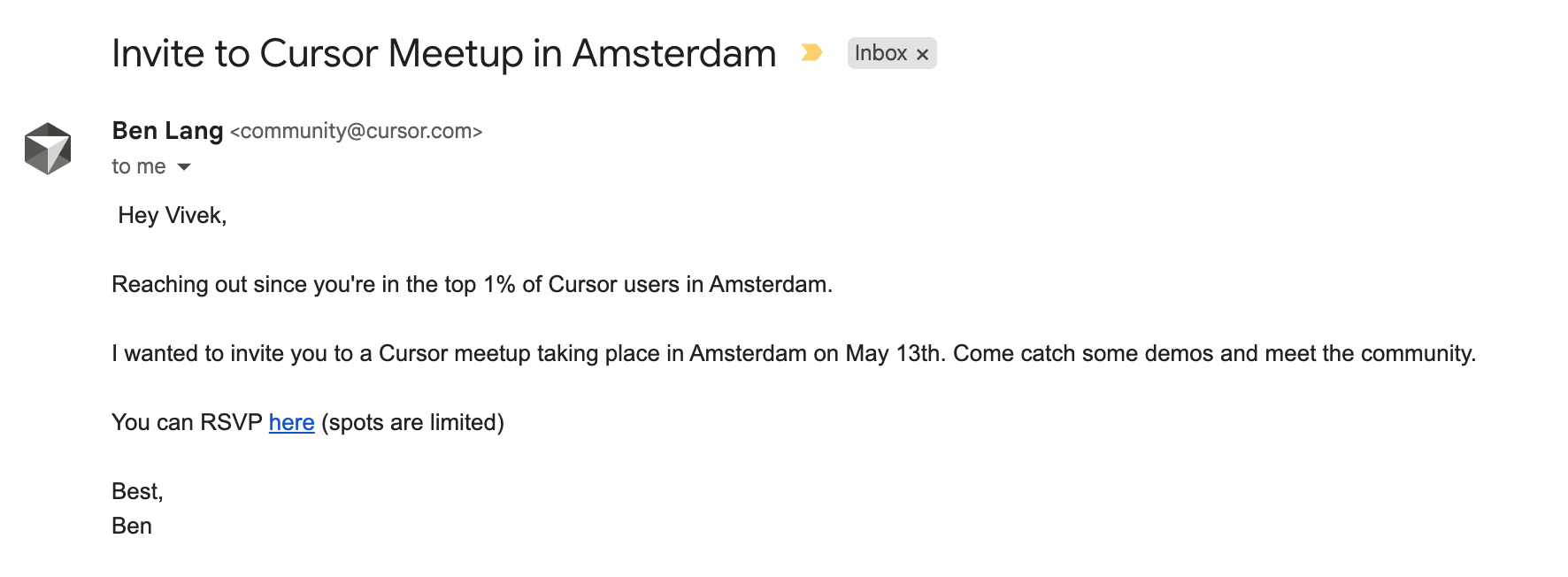
Got this last week. Whether the 1% is precise or just good community marketing, I have been on Cursor since February '25, and the 2025 Wrapped on my personal account came in at 1.16 billion tokens.
So yes, I am very much inside the bubble I am about to describe.
The work has changed. A weekend project can now look like a sprint of work. People who could not ship before are shipping. I think this is amazing! Friends of mine who do not write code for work have built real products with Lovable and Claude this year. Watching them do it has been one of the better parts of 2026.
The part worth being honest about is that much of this was subsidized. The math on inference at developer-scale usage has not worked out, and the gap has been held open by venture money. GitHub is moving Copilot to usage-based billing on June 1st, and their own post acknowledges that the current model is unsustainable and that they have been absorbing much of the inference costs. I expect the rest of the stack to reprice in roughly the same direction. The price is a promotion, and promotions end.
What I am more confident about is that the craft did not die. It became visible. Syntax got cheap. Indentation got cheap. Getting code to run is cheaper than it has ever been. Local models will keep pushing that floor lower. What stays expensive is intent: what is being built, why, and for whom. Our attention moved from indent to intent (sorry, not sorry).
The questions that are left are the ones that always took longer to learn. Where the service boundaries go. Why a feature should exist before the code that makes it exist. What happens when the code is wrong in ways the model could not see. These have gotten easier to attempt, and no easier to get right.
What lasts from this era will be the software that earns being kept. Product-market fit still matters. Design always mattered, and now it is one of the few axes left to compete on. When more people can ship the feature, the question moves from whether it can be built to whether it deserves to exist: how it sits in your life, what it helps you notice, and what you remember a week later. Anyone can build a tool. Building one worth keeping is the open question, and I am not sure who is going to win.
So I will be there on May 13th, partly to see the tool that has eaten over a billion of my tokens, partly to see the people who keep deciding what it builds.